Friday, 15 May 2020

What is 'weight' and what is to be done?

Why do we value knowledge?  Because we like to learn from it, and learning enables us to do things - one of which is to understand a bit more about life, the universe and everything.

What is my practice?  What do I actually do as a filmmaker?  This is an important question for me to answer because it may help to justify the funding of a PhD, which must be a 'significant and original contribution to knowledge'.

So, there is knowledge produced through creative experimentation in the processes employed in filmmaking.

Where does this knowledge show itself?  In documentation of the processes - which can be read and followed by other filmmakers.  And in the artefact produced -

How do you learn to do art?  You look at lots of it.  You think about what you have seen.  You compare it to what you do.  You analyse the differences.  You practice.  You read about how artists do it.  You copy emulate them.  You do it.

A 'significant and original contribution' must be a useful guide to others in your field.  Two questions can be answered:

How do you make films?(practice)  Thesis       'This is what I do'.
What is filmmaking?      (theory)     Antithesis  'How does it compare with others'
Look here!                      (my film)  Synthesis  'Learn from this'.

My film is the embodiment of my practice as informed by my thinking about the theories of film making.  If you can learn from something, it must contain knowledge.  My film shows what a film can be, and how a film can be/look/sound.  Knowledge what and knowledge how.

HOWEVER -
Your practice might be ill-informed, lack technique, be unreflective.
Your ability to theorise and show your understanding of theory may be poor.
Your finished work might be boring, derivative, uninspiring.

In other words, there may be nothing (new) to learn from it, so although it could be claimed to embody some knowledge, it lacks usefulness, so is insignificant.


Insignificant - Mohyaddin Alaoddin - Medium


Thursday, 14 May 2020

The Nantlle manifesto...

...of the moving image.

Ten Rules for a Refreshed Cinema.

  1. No crew.
  2. No trained actors.
  3. No standard linear narratives.
  4. No special effects.
  5. No dialogue.
  6. No budget.
  7. No script/screenplay.
  8. No genres.
  9. No pandering to social norms.
  10. No films over 45 minutes.
  11. No musical interludes.
NO!
The Story Of Scorsese And Al Pacino's Doomed 80s Modigliani Movie
Self-satisfaction!

Wednesday, 13 May 2020

Understanding:Knowledge

A hard nut.
A sledgehammer to crack a nut' - meaning and origin.
This is a struggle.  If I share my understanding, gleaned from researching an activity or process (or performance), is this classed as knowledge?  If no one else has this understanding, and I transform it (by externalising it) from subjective to objective existence (by writing about it) does it become knowledge?

How is knowledge created? 
  1. Observe....read/do/experience.
  2. Record.....note/remember/write.
  3. Analyse....think.
  4. Report....write.
What we observe is affected by our beliefs.  

Three domains: Subjective - beliefs
                          Objective - knowledge
                          The bit between - ?

Thesis --- Antithesis ---- Synthesis

A question(s).

What factors (creative opportunities) in filmmaking are independent of large budgets?
What creative opportunities gets lost in the leviathan of a big budget?
How do limitations in creative processes feed new discovery?
What gets lost when a production is small?  What gets found?

Changes in technology mean that one person can write, make and distribute a watchable film.  A singular vision can be expressed.  This person is an ultra-auteur.

A lot is gained through collaboration.  A single, unique overarching [poetic] vision is lost.

Researching is finding things out - gaining knowledge that already exists.  New knowledge can emerge when reflection/analysis [practice?] is applied, and a discussion [artefact?] results in conclusions that modify / change the perspective on, that existing knowledge.


  • Films made by individuals exist.
  • These can be examined and appraised, together with the histories and contexts of their production and reception.
  • A solo practitioner can make a film [or films].
  • This can be examined and appraised, together with documentation of process.


The three stage model of filmmaking can be applied to a doctorate:
  1. Pre-production
  2. Production
  3. Post-production
The PhD is a solo creative enterprise.  It has commonalities with solo filmmaking.

What is the difference between an artefact [film] produced in an academic context, and one produced outside academia?  Intention?  Audience?  Relevance?  Freedom of expression?

What is the difference between research carried out in an academic context, and research carried out in other contexts?  The degree of objectivity [checking]?

How can you combine making art with research?  What is the recipe?  How do you make it taste good?  What ratios to you apply?

How does an artefact embody knowledge?  It embodies understanding (how to make it).  Is understanding knowing how?

I know how society/the economy works because I understand how all of its parts fit together and influence each other.  Claims to knowledge entail understanding.

'A significant original contribution to knowledge' - 'sock' - science PhD
'A significant original contribution to understanding' - 'socu' - humanities PhD.

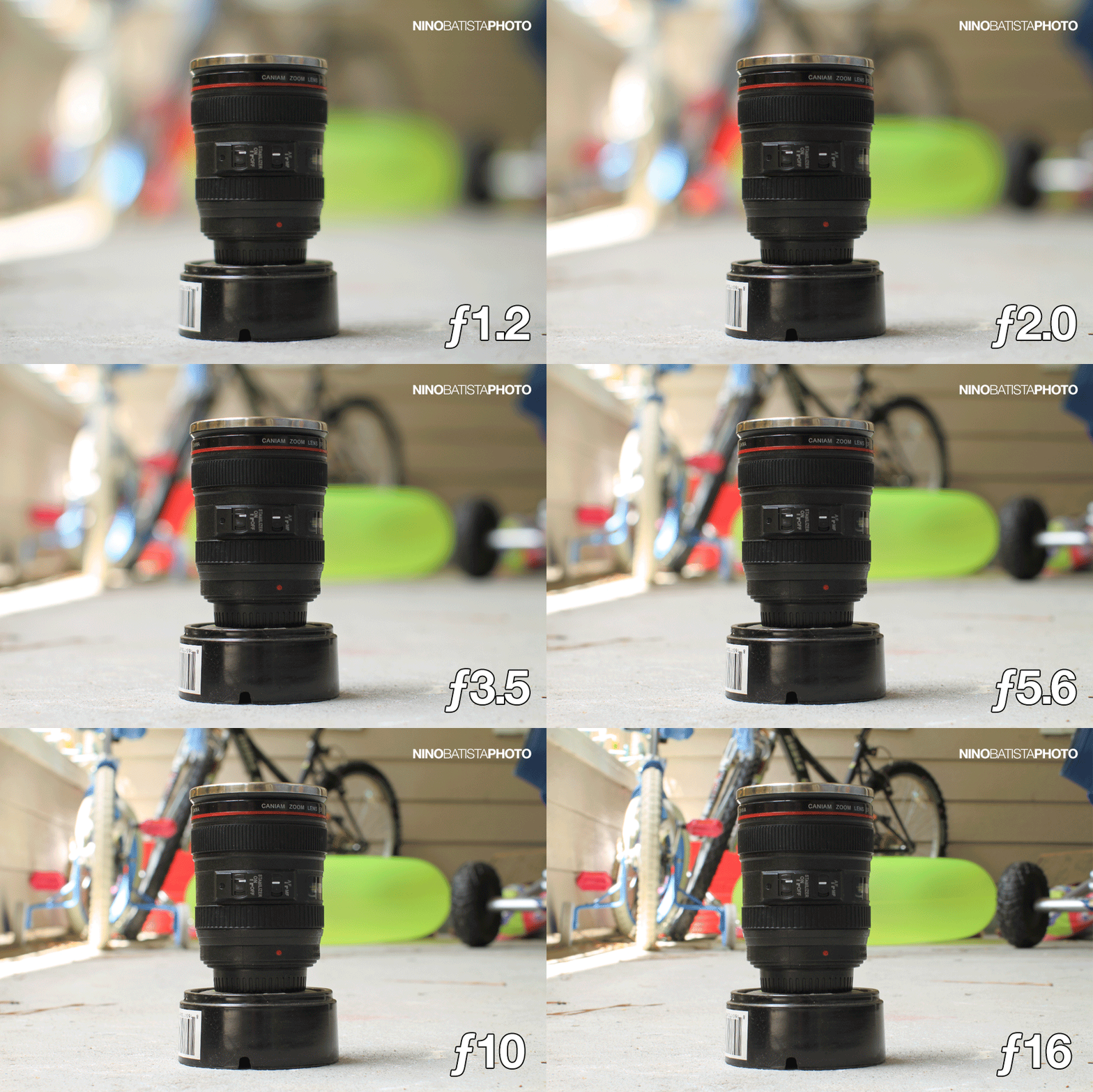
Depth of field visualization


There is an interesting difference between data and information.  Data becomes information (becomes useful) when it is given a context, through processing and organisation.  When does information become knowledge?

Researching filmmaking is not about collecting data, except in the realm of film marketing.  

Tuesday, 12 May 2020

Research Based Practice.

This is another approach.

Perhaps terms can be misleading when they are created as a shorthand way of referring to complex ideas.  All artistic activity involves research.  Research precedes making art.

Is there an art of research?  Research is a creative activity.  It should create knowledge.  It can create art objects.  Art objects are learning materials.  They contain knowledge.

Research and art practice.

Exploration is required if new knowledge is to be discovered.  Connecting ideas can result in new perspectives.

Science is empirical.  Its object is knowledge.

The humanities are more concerned with understanding.
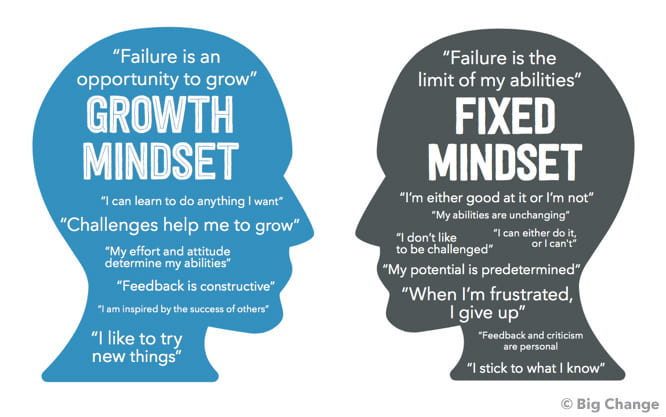
Understanding the Growth Mindset – Academic Skills Center Blog

Monday, 11 May 2020

Desmond's obscure object, and Tara's desire.

A Phd has to have a 'sock' - a significant and original contribution to knowledge.  What kind of knowledge is this?  The research that is carried out needs an outcome, but when it comes to PhDs in the humanities, this outcome is going to be of a different kind to a PhD in the domain of science.

A PhD that concerns research that is based on or led by practice will have a different coloured sock to a PhD where the 'practice' is sitting in a dusty archive in a library or a laboratory of bubbling test tubes (or possibly blinking lazers).   A practice-based PhD in film will contain research that colours the sock in hues derived from the processes carried out whilst film making. These hues may be more concerned with understanding than with knowledge.  But it's more complicated than that.   It's about methodology.

Desmond Bell's article (cited below) is a useful discussion about this.  Also below, Tara Brabazon discusses the difference between empirical (science) methodologies and the more holistic, interpretive method involving meaning making strategies, typical of a humanities PhD.

Knowledge can be subjective*.
*This has been a topic of dispute throughout the history of philosophy.

'The researcher's experiences link to the research undertaken'.

Desmond Bell (2006) Creative film and media practice as research: In pursuit
of that obscure object of knowledge, Journal of Media Practice, 7:2, 85-100, DOI: 10.1386/
jmpr.7.2.85_1
To link to this article: https://doi.org/10.1386/jmpr.7.2.85_1

Tara Brabazon, dean of postgraduate studies at Flinders University, Australia:

https://youtu.be/SWtPhvIXaOg

Sunday, 10 May 2020

Lost in Space

It is important to keep writing, otherwise you tend to forget how to do it.  Even finding the letters on the keyboard can become a task.  Typing is actually a physical chore, as it is not done on all fingers in the Catullus Films office, just on the two index fingers.  This, coupled with a blindness for correct spelling that requires regular googling, makes generating 'product' rather slow and...onerous.

However, once a flow has begun, and the ball is rolling down a slight incline over wet grass and small pebbles left by the last glaciation, things become a little easier - the fingers begin to remember the location of the required letters for expression, and the brain can register how words are formed more easily.

So, to work - what are we writing about today?  This will be a 'meta-writing' session, (perhaps 'session' is too glorious a word), intended as a note-to-self about why I am struggling to bother writing anything at all in the present chapter of my life. 

I don't really need to write, so what's the problem?  I don't really need to live actually.  Nothing has any necessity, except maintaining satori - keeping panic at bay, dealing with the fear of depression, warding off the big black cloud that occasionally looms over the distant mountains.

There - motivation.


Wednesday, 8 April 2020

'Onsight' ascent at the cinema


It's interesting to reflect on the role of the review, as a bridge between the audience and the work.  There are different ways of 'seeing' a film - with no prior knowledge, or after reading and hearing about it.

It makes me think of two different modes of rock climbing (something I do from time to time).  You can climb a route with no prior knowledge ('beta') which is called an 'onsight', or you can 'redpoint' a climb, having gained lots of information beforehand (much easier of course).

'Onsight' is especially respected because it requires a higher level of mental agility (and it's more dangerous!).  Of course routes can be repeated (and films watched again) and the experience changes over time.  You can tackle (and enjoy safely) harder routes if you 'redpoint' them.  And you can avoid wasting time and money by reading reviews before you attend showings.

I used to buy long playing records (albums) based on the cover.  Sometimes I was lucky and discovered something new that had merit.  As I drove across the south island of new Zealand in 2000, I would stop at little shops and discover very obscure cassette tapes, often with a religious theme.  Playing these as I glided along deserted roads with distant views made for surreal solitude and lots of laughing.

Climbing 'Valkyrie' at The Roaches, 2010.
I've always been a 'browser', and there's nowhere better to browse than a library, once you've found the shelf with the topic you're wrestling with.  It is research 'embodied', and much more of an intellectual adventure than searching the catalogues online (though this might be the starting point to finding the right shelf).  There is always the likelihood that your eyes will stray to the shelf above or below, and a new train of thought will ensue.